MQTT + Cumulocity IoT Platform

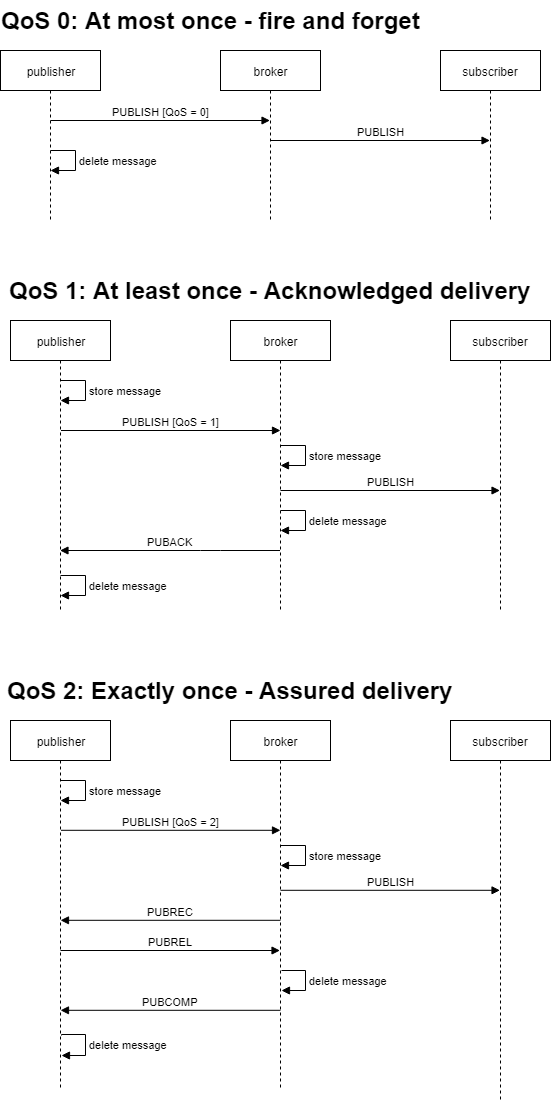
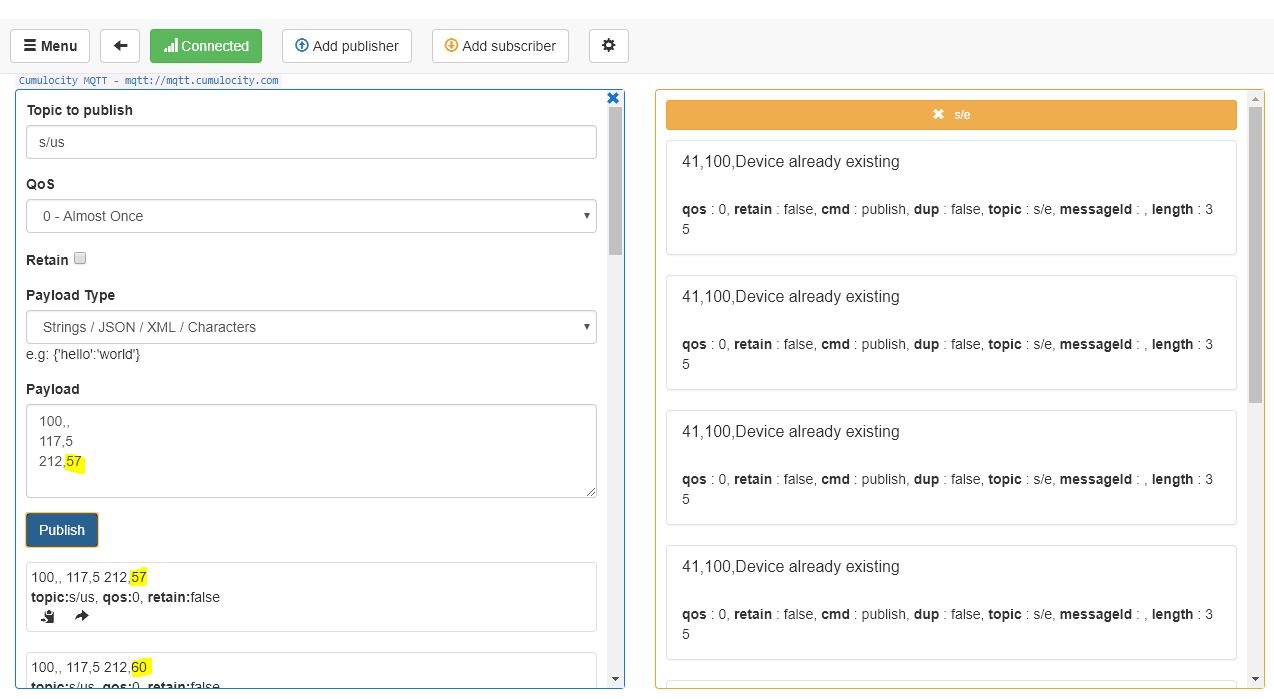
MQTT Summary [Source: Wikipedia] MQTT (Message Queuing Telemetry Transport) is an open messaging protocol for machine-to-machine communication (M2M) that enables the transmission of telemetry data in the form of messages between devices, e.g. sensors. The Internet Assigned Numbers Authority (IANA) reserves ports 1883 and 8883 for MQTT. MQTT messages can be encrypted using the TLS protocol. The MQTT specification distinguishes between TCP/IP-based and non-TCP/IP networks. MQTT is a client-server protocol. Clients send messages with a topic to the server (“broker”) after establishing a connection; the topic hierarchically classifies the message, for example Kitchen/Fridge/Temperature or Car/Wheel/3/AirPressure. Clients can subscribe to these topics, and the server forwards received messages to the respective subscribers. ...
January 26, 2019 · Aaron

IO-Link Device Description (high level)

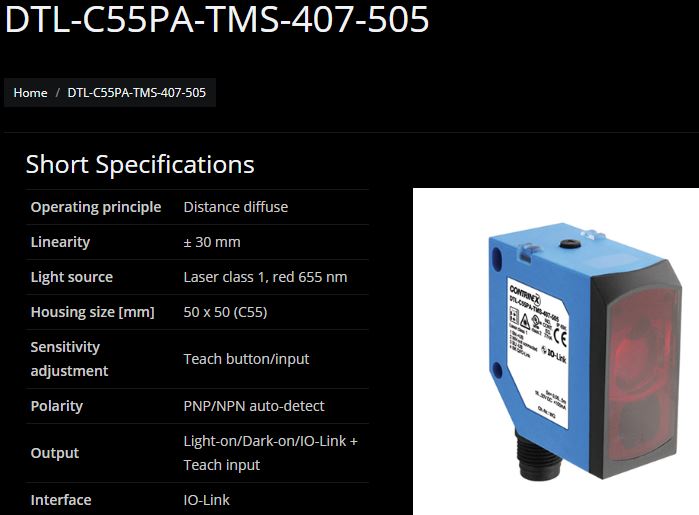
Under the brand name IO-Link there is a communication system for the connection of intelligent sensors and actuators to an automation system standardized in IEC 61131-9 under the designation Single-drop digital communication interface for small sensors and actuators (SDCI). The standardization covers both the electrical connection data and a digital communication protocol through which the sensors and actuators exchange data with the automation system. An IO-Link system consists of an IO-Link master and one or more IO-Link devices, i.e. sensors or actuators. The IO-Link master provides the interface to the higher-level controller (PLC) and controls communication with the connected IO-Link devices. ...

September 4, 2018 · Aaron

Modbus: Summary of the Specification (high level)

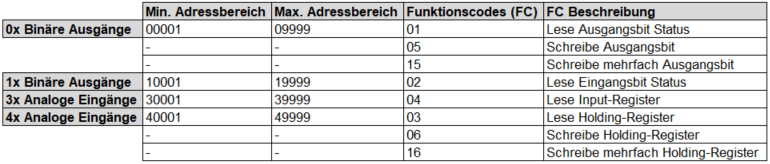
The Modbus protocol is a communication protocol based on a master/slave or client/server architecture. It was introduced in 1979 by Gould-Modicon for communication with its programmable logic controllers. In industry, Modbus has become a de facto standard as it is an open protocol. Since 2007, the Modbus TCP version has been part of the IEC 61158 standard. [Wikipedia] As the following diagram shows, Modbus allows communication over different networks: ...

August 12, 2018 · Aaron

CoAP: Specification Summary (high level)

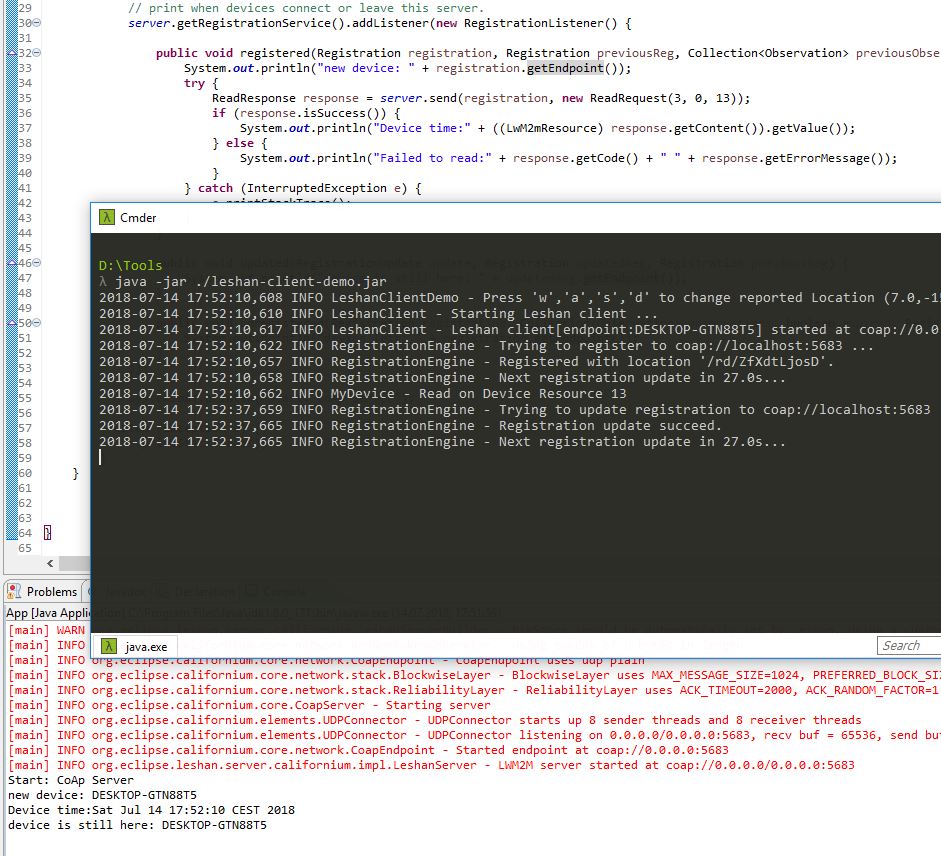
Constrained Application Protocol (CoAP) CoAP is an Internet application protocol specified in RFC 7252. The protocol is used for communication of devices ’nodes’, e.g. embedded devices, that consume very little energy (low-power) and operate in networks with increased data loss (lossy networks), for instance IPv6 over Low-Power Wireless Personal Area Networks (6LoWPANs). CoAP can also be used within Internet-based networks for mobile communication via SMS. CoAP is primarily used in the context of the Internet of Things (IoT) and Machine-to-Machine (M2M), as device data/sensor data of small size is usually transmitted. Since this type of data is transmitted at regular intervals (cycles), individual (lost) data packets have no significant impact on the processing systems or applications, such as an IoT platform that processes and/or graphically displays the corresponding sensor data (temperature, rotation speed, etc.). ...

July 12, 2018 · Aaron

MQTT: Summary of the Specification (high level)

MQTT (Message Queue Telemetry Transport) is an open messaging protocol for machine-to-machine communication (M2M) that enables the transmission of telemetry data in the form of messages between devices, despite high latency or constrained networks. Corresponding devices range from sensors and actuators, mobile phones, embedded systems in vehicles or laptops to fully developed computers. [Wikipedia] The information about the specification listed below comes, among other sources, from the current MQTT specification of IBM. ...

July 9, 2018 · Aaron